

Why Does Choosing the Right PVC Cable Trunking Matter More Than Most Buyers Expect?
2026-03-23
When I talk with contractors, distributors, and project buyers about cable management, I often notice the same issue: many people only start paying attention after messy routing, difficult maintenance, or premature material failure begins to create problems on site. That is exactly why I want to discuss PVC Cable Trunking through a practical lens. As I learned more about the manufacturing direction of Yueqing Desai Plastic Co., Ltd., I found their focus on structured cable protection, cleaner installation, and long-term usability reflects what many buyers are actually trying to solve in real projects rather than what generic catalog descriptions usually emphasize.
In my experience, buyers rarely need exaggerated claims. What they need is a cable management solution that looks neat, installs smoothly, protects wiring effectively, and helps reduce future labor. A well-made PVC Cable Trunking system can do exactly that when it is selected with the right standards in mind. Instead of treating it as a simple accessory, I see it as a small but critical part of electrical safety, visual order, and maintenance efficiency.
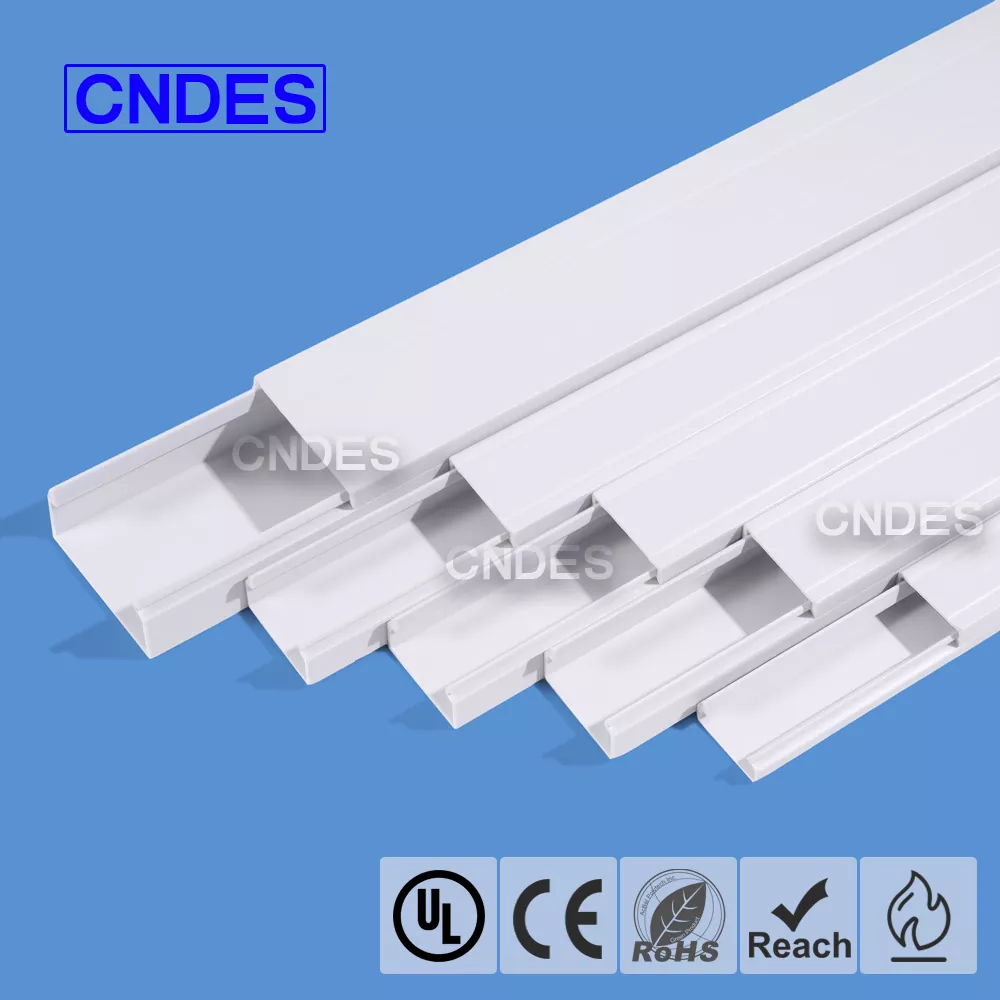
Why Do So Many Cable Management Problems Start with the Wrong Product Choice?
I have seen projects where the cables were technically installed, yet the final result still felt disorganized, fragile, or inconvenient to service. In many of those cases, the problem did not come from poor workmanship alone. It started with choosing a trunking product that was too thin, poorly sized, difficult to cut, or unreliable in daily use.
- I often find that undersized trunking leads to overcrowded cable routing and harder maintenance later.
- I also see low-quality material become brittle over time, especially in environments with frequent handling or temperature variation.
- I notice that badly designed covers can loosen too easily or fit too tightly, which slows installation.
- I regularly hear from buyers who want a cleaner wall or panel appearance but end up with uneven finishing because the product dimensions are inconsistent.
That is why I believe the real value of PVC Cable Trunking is not limited to cable concealment. It also affects workflow, site appearance, protection, repair convenience, and project confidence.
How Can I Tell Whether PVC Cable Trunking Will Actually Perform Well in Real Use?
When I evaluate a product, I do not start with marketing language. I start with practical questions. Will it help me route cables clearly? Will it stay stable after installation? Will it support daily maintenance? Will it look professional in a finished project? These are the questions that matter.
I usually look at product performance from the following angles:
- I want smooth and consistent surfaces that make the trunking look professional after installation.
- I expect stable dimensions because irregular sizes create fitting issues and waste labor time.
- I prefer material with dependable rigidity so the trunking can protect wires without becoming difficult to handle.
- I pay attention to cover design because easy opening and secure closing both matter during operation and maintenance.
- I check whether multiple size options are available because different projects rarely use one universal specification.
In other words, a good PVC Cable Trunking product should help me finish work faster today while making future inspection and cable changes easier tomorrow.
What Product Advantages Usually Make the Biggest Difference for Buyers and Installers?
From a buyer's perspective, product advantages only matter when they solve real jobsite pressure. I do not choose cable trunking simply because it exists in stock. I choose it because it can lower the risk of disorder, reduce rework, and make the finished installation more professional.
| Buyer Concern | What I Look For | Why It Matters in Practice |
| Installation efficiency | Easy cutting and fitting | It helps reduce labor time and improves on-site workflow |
| Cable protection | Durable material structure | It helps keep wires organized and shielded from external impact |
| Maintenance convenience | Secure but removable cover design | It makes inspection, replacement, and upgrades easier |
| Project appearance | Smooth finish and uniform dimensions | It creates a cleaner and more professional result |
| Product matching | Wide size selection | It allows better adaptation to different wiring volumes |
These are the reasons I treat PVC Cable Trunking as a value-driven purchase rather than a low-priority material line. Once I focus on the total project outcome, product quality becomes much more important.
Why Does Material Stability Matter Even When the Trunking Looks Similar at First Glance?
At first glance, many products in the market appear close to each other. I understand why some buyers feel tempted to compare only by price. However, similar appearance does not always mean similar performance. In cable routing products, stability in material quality often becomes visible only after cutting, fixing, closing, reopening, and using the system over time.
I have found that better product stability usually supports several important outcomes:
- I get cleaner edges during cutting and fitting.
- I see less risk of warping or weak structural feel during installation.
- I can maintain a more consistent finish across the project.
- I reduce the chance of replacement caused by cracking, poor fit, or cover failure.
For me, this is where PVC Cable Trunking starts showing its true commercial advantage. A dependable product does not just save material cost. It also protects project rhythm, installer patience, and buyer reputation.
How Does Good Trunking Help Me Solve Cleanliness and Space Problems in Electrical Projects?
One of the most common pain points I hear from customers is not simply cable safety. It is cable chaos. Whether the project involves commercial interiors, industrial cabinets, workshop wiring, office upgrades, or distribution setups, exposed or poorly grouped cables can quickly damage both usability and appearance.
That is why I believe a strong cable routing system should solve multiple problems at once:
- I want it to separate and guide wires more clearly.
- I want it to make the layout easier to understand during inspection.
- I want it to improve the visual order of walls, panels, and equipment areas.
- I want it to support expansion when more cables need to be added later.
In these cases, PVC Cable Trunking becomes more than a protective enclosure. It becomes a practical tool for organization, space control, and long-term management.
What Should I Compare Before Deciding Which Supplier Deserves My Attention?
When I evaluate a supplier, I do not stop at product photos. I care about whether the supplier understands what professional buyers actually need. A reliable manufacturer should support product consistency, specification clarity, and communication efficiency. That matters just as much as the product itself.
| What I Compare | Why I Compare It | What It Tells Me |
| Available sizes | I need flexibility for different cable volumes | The supplier understands real application diversity |
| Surface and finish consistency | I care about final installation quality | The factory likely controls production more carefully |
| Sample responsiveness | I need to test before scaling orders | The supplier is serious about cooperation efficiency |
| Application understanding | I want solutions, not vague product claims | The supplier can better support project selection |
| Communication reliability | I need smooth order coordination | The supplier is easier to work with long term |
This is one reason why I pay attention to manufacturers that appear to focus not only on selling products, but also on improving usability and fit for real wiring environments.
Can Better PVC Cable Trunking Really Support Efficiency and Cost Control at the Same Time?
Yes, and I think this point is often underestimated. Some buyers still treat trunking as a line item where the lowest quote should win. I understand the pressure behind that decision, especially in competitive projects. Still, I have seen how low-quality cable management products quietly increase total cost in other ways.
When I choose a more reliable PVC Cable Trunking solution, I often reduce hidden losses such as:
- extra labor caused by fitting difficulties
- material waste caused by inconsistent dimensions
- time spent reopening and adjusting poor covers
- future repair inconvenience caused by messy layout
- client dissatisfaction caused by an untidy visual finish
From my perspective, cost control is not only about purchase price. It is about balancing product quality, labor efficiency, appearance, protection, and service life in one decision.
Why Do Buyers Prefer Natural, Practical Solutions Instead of Empty Product Claims?
I think the answer is simple. Buyers are under pressure to solve problems, not to collect slogans. When I read product content, I trust suppliers more when they speak clearly about application value, installation convenience, and everyday performance. That kind of communication feels closer to how real engineers, importers, contractors, and distributors actually think.
That is also why a well-positioned PVC Cable Trunking product should be presented in a grounded way. I want to know how it helps me work better, how it protects my cables, how it improves the final result, and how it supports repeat purchasing confidence. If those answers are clear, the product already stands on stronger ground.
Would I Recommend Looking More Closely at a Supplier That Understands These Real Project Needs?
I would. Whenever I see a supplier paying attention to practical specification range, manufacturing consistency, and user-oriented design, I know the conversation is moving in the right direction. In a market where many products can look similar in photos, real value often comes from how well the product performs once it reaches the installer's hands and the buyer's project site.
If you are currently comparing options for cleaner routing, better wire protection, and a more professional installation result, this is the right time to take a closer look at PVC Cable Trunking solutions that are built around actual use rather than generic claims. If you want dependable product details, size support, and a supplier that understands practical cable management needs, please contact us today and send your inquiry. I would strongly encourage you to connect with the team behind Yueqing Desai Plastic Co., Ltd. to explore the right solution for your next project.