

Wholesale RFID Wristband Printer: Key Features & Buying Tips
2026-06-23
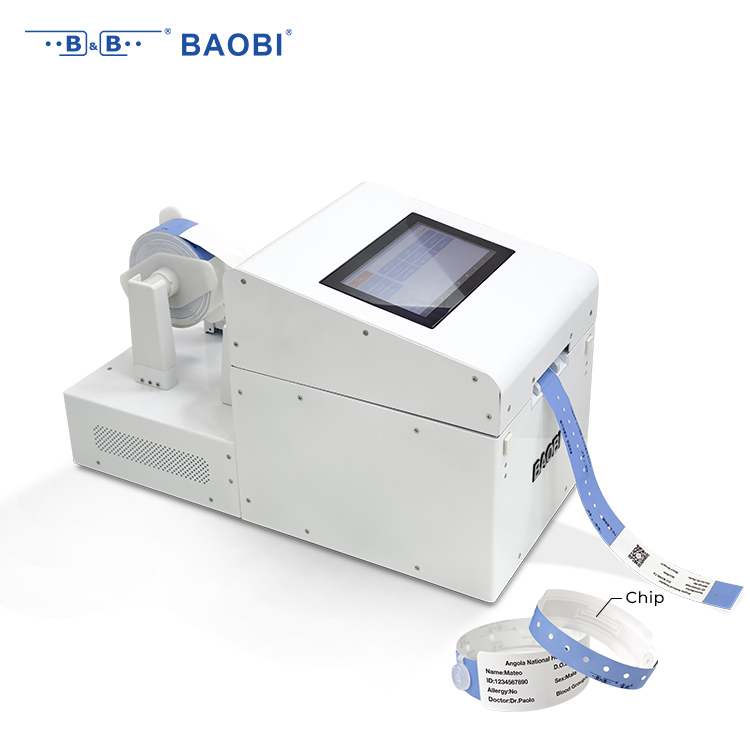
Wholesale RFID wristband printers may look similar at first glance, but their performance can make or break your event's efficiency. From durable builds to seamless encoding, BAOBI has earned a reputation for delivering reliable, feature-packed solutions at bulk-friendly prices. In this guide, we break down the must-have features and insider tips to help you invest wisely.
Why Choose an RFID Wristband Printer for Your Events
Handling large crowds at events always comes with its own set of headaches, especially at the entry gates. An RFID wristband printer lets you encode and print wristbands on the spot, so guests breeze through check-in without fumbling for tickets or waiting in long lines. It cuts down the chaos and gives your team one less thing to sweat about when doors open.
Beyond the obvious speed boost, these wristbands add a layer that makes attendees feel like insiders. You can tie access levels, cashless payments, or social media sharing directly to each band. Guests like the convenience of just tapping their wrist, and you get a cleaner, more connected event flow without constantly handing out paper slips or rechecking IDs.
The real magic happens after the event, though. With RFID data, you can see how people moved through the space, which sessions filled up, and where lines stacked up. It’s the kind of feedback that turns guesswork into actual decisions for next time, all while keeping things secure and reducing lost badges. For anyone who runs events regularly, that alone makes the switch worth considering.
Key Hardware Features to Look For
When evaluating hardware, start with the processor—it’s not just about clock speed anymore. Look for a chip that balances performance cores and efficiency cores, as this directly impacts both raw power and battery life. Recent architectures often include dedicated AI engines, which can accelerate tasks like photo editing and voice recognition without hammering the CPU. Pay attention to the manufacturing process node too; a smaller nanometer design generally means better energy efficiency and less heat, which is vital for thin laptops and fanless devices.
Memory and storage are areas where manufacturers frequently cut corners. Aim for at least 16GB of RAM if you multitask heavily or work with large files, and check whether the RAM is soldered or upgradeable—soldered memory may save space but limits future expansion. For storage, PCIe Gen 4 NVMe SSDs are the sweet spot, but verify the actual read/write speeds rather than just the interface. Also consider endurance ratings if you constantly write data; some drives slow down significantly once their cache is exhausted.
Don’t overlook connectivity and ports. Wi-Fi 6E or 7 support is becoming essential for congestion-free wireless, but the number of antennas and spatial streams can affect real-world performance. Thunderbolt 4 ports offer versatility, but check the power delivery and video output capabilities—not all implementations are equal. If you use wired peripherals, a mix of USB-A and USB-C is still practical, and an HDMI 2.1 port can be a dealbreaker for external high-refresh monitors.
Software & Encoding Capabilities
Our platform handles a wide range of multimedia conversion tasks natively, supporting both common and niche formats without relying on third-party codecs. Whether you work with H.264, HEVC, or VP9, the underlying engine adapts to the source material, preserving details that other tools often discard. Batch processing is built around a queue system that lets you pause, reorder, or prioritize jobs, giving you full control over large-scale projects.
Encoding parameters can be fine-tuned down to the frame level, with options for keyframe intervals, bitrate ceilings, and color space conversion. Advanced users appreciate the integration of custom presets that can be saved and shared across devices, ensuring consistent output across teams. Hardware acceleration is automatically engaged on compatible systems, significantly reducing processing time without sacrificing quality.
Live capture workflows are equally robust, allowing direct encoding from camera feeds or desktop streams with minimal latency. The software’s audio encoding pipeline handles multichannel tracks cleanly, preserving spatial audio metadata when converting between container formats. Regular updates add support for emerging codecs, so your toolkit stays relevant without requiring manual patches or disruptive upgrades.
Wristband Material & Durability Matters
A wristband might seem like a minor accessory, but the material it’s made from can make or break your daily experience. Cheaper silicone often gets sticky after a few months of sweat and sun exposure, while a well-formulated fluoroelastomer stays smooth and resists discoloration. Fabric bands, on the other hand, breathe better during workouts but can trap odors if not rinsed regularly. The key is finding a material that matches your lifestyle—something that feels almost invisible on your wrist even after 12 hours of wear.
Durability goes beyond just surviving a splash of water. It’s about how the band holds up against constant friction, stretching, and contact with oils from your skin. A woven nylon loop with tight stitching will outlast a thinly bonded leather strap that starts peeling at the edges. Metal clasps and connectors are common failure points; look for ones with a solid locking mechanism rather than a flimsy pin. Over time, a well-made band might show a bit of patina—some scuffs or softening—but it shouldn’t crack, fray, or lose its shape entirely.
Speed vs. Print Quality: Finding the Balance
Every 3D printer owner eventually faces the same dilemma: rush a job and risk a messy outcome, or slow things down and wait forever. Speed and quality often feel like opposing forces, but understanding how they interact can help you strike the right balance for your project. At its core, the trade-off comes down to physics—moving the print head faster increases vibrations and reduces the time the filament has to bond, leading to artifacts like ringing or poor layer adhesion. However, modern printers with rigid frames and advanced firmware can push the limits much further than older machines, letting you print faster without sacrificing as much detail.
The key is matching your settings to the print’s purpose. A functional bracket hidden inside a machine doesn’t need to look flawless; you can crank up the speed, use thicker layers, and get the part in your hands quickly. But a display piece with intricate curves demands patience—slower speeds, thinner layers, and careful cooling give the filament time to settle into crisp, clean lines. Some slicers now offer adaptive speed features that automatically adjust based on geometry, slowing down for overhangs or small perimeters while speeding through straight infill. Experimenting with these tools can save you from manually tweaking every setting, though a bit of trial and error still goes a long way in learning where your specific machine starts to struggle.
Beyond hardware and slicer tricks, material choice also plays a role. Flexible filaments often require snail-paced printing to avoid jams, while PLA can tolerate much zippier moves if your cooling is on point. The real sweet spot comes when you stop seeing speed and quality as enemies and start treating them as dials you adjust based on what matters most for each print. Keep a log of what works—maybe 60mm/s for detailed PLA models or 80mm/s for PETG drafts—and you’ll develop an intuition that no default profile can replicate.
Smart Buying Tips for Wholesale Deals
Before diving into any bulk purchase, it pays to dig into the real street price of what you’re after. Too many buyers get dazzled by a low unit cost and end up with shelves full of mistakes. Instead, sketch out a realistic demand forecast and start with a smaller trial order—this lets you test both product quality and supplier reliability without tying up too much cash. Keep an eye on seasonal dips, too; many wholesalers slash prices to clear inventory during slower months, giving you room to negotiate even better terms.
Build relationships like you’re planning to stick around. A quick call or visit to the supplier can uncover hidden costs—shipping quirks, packaging mismatches, or minimum order tweaks that aren’t in the catalog. Ask for payment flexibility: sometimes a slight discount for early settlement outweighs waiting for net-30. And always, always get your hands on a physical sample before committing to a container. A deal isn’t smart if the goods land and disappoint your customers.
FAQ
These machines embed and encode RFID chips directly into wristbands during the printing process. A standard printer only handles visual output, while an RFID printer writes data to a tiny inlay, verifies it, and then overprints the design in one seamless step. This eliminates the need for separate encoding stations and reduces handling errors.
Absolutely, but efficiency depends on print speed, encoding time, and media capacity. High-end models can process hundreds of wristbands per hour, but a real bottleneck is often the ribbon change or media loading. Look for printers with large ribbon rolls and easy-to-swap wristband cartridges to keep production flowing without constant stops.
Silicone, Tyvek, polyester, and synthetic paper are the most common. Each material has different thickness, flexibility, and heat sensitivity. A good wholesale printer should have adjustable printhead pressure and temperature settings to handle these variances, preventing wrinkles, misreads, or chip damage during encoding.
It's critical. Encoding a chip takes milliseconds, but when multiplied by thousands of wristbands, the difference between a printer that encodes at 200 tags per minute and one that does 50 becomes enormous. Buyers often overlook this, but the encoding module's read/write speed and its ability to handle weak or marginal tags directly impacts throughput.
Industrial-grade metal frames and sealed printheads last longer in dusty or high-volume settings. Avoid plastic chassis if you're running 24/7 shifts. Also check how easy it is to clean the printhead and rollers—some models have tool-less access, which saves hours of downtime over a year.
Beyond basic USB, look for dual-band Wi-Fi, Ethernet, and Bluetooth for mixed environments. Serial or GPIO ports can be essential for integrating with legacy access control systems. Some printers even offer cloud-based remote management, which is handy for monitoring multiple units across different locations.
Check the printer's native resolution (at least 300 dpi is recommended for sharp text and logos). Next, test it with your actual graphics on the wristband material you intend to use—colors can render differently on silicone versus Tyvek. Ask for sample prints before committing to a bulk order, and see if the printer supports variable data for serialization without slowing down.
Underestimating media compatibility is a big one—some printers are locked to proprietary wristband formats, limiting future supplier choices. Also, ignoring firmware update support can leave you stuck with a printer that can't handle new chip types. Finally, not factoring in the cost of calibration when switching between differently shaped wristbands can eat into margins.
Conclusion
RFID wristband printers have become indispensable for modern events, transforming entry management and crowd flow with a tap-and-go approach that eliminates long queues. Beyond simple access control, these printers let you encode unique data onto durable wristbands on site, giving you flexibility to handle last-minute registrations or upgrade access tiers in real time. When evaluating hardware, don't just focus on dots per inch—look for an integrated RFID encoder that supports the right frequency for your needs (usually UHF or HF/NFC), and check whether the printer can handle different wristband materials without jamming. A model with a reliable thermal transfer system and an intuitive calibration process will save you hours of frustration during setup.
Software plays an equally critical role: the printer should pair with a solution that lets you customize data encoding and layout without deep technical skills. Pay close attention to wristband stock—options range from lightweight Tyvek for single-day festivals to rugged silicone for multi-day camping events, and the right choice prevents print fading or band breakage. There's always a tension between rapid throughput and crisp graphics, so match your event's pace to a printer that handles high-speed batches without sacrificing barcode or text clarity. For wholesale purchases, request sample prints on your actual wristbands to assess color fidelity, and verify total cost of ownership by calculating the price of consumables like ribbons or printheads over time. A supplier with responsive after-sales support and a willingness to demonstrate remote set-up can save you from costly downtime later.
Contact Us
Contact Person: Bill Xu
Email: [email protected]
Tel/WhatsApp: 8618688898707
Website: https://www.baobitech.com/