ODM Textured Geomembrane: Enhancing Durability and Performance in Containment Systems
2026-08-12
In containment systems, where leaks and failures are not an option, the choice of geomembrane can make or break a project. While smooth geomembranes have long been the standard, textured variants are rapidly gaining ground—offering enhanced interface friction, better slope stability, and superior durability under stress. Among the innovators driving this shift is JInseed Geosynthetics Solution, whose ODM textured geomembrane pushes performance boundaries. But what exactly sets a high-quality textured geomembrane apart? And how can it transform the safety and longevity of landfills, mining ponds, or wastewater facilities? Let’s explore the engineering behind the surface.
Surface Friction That Redefines Slope Stability
For years, slope stability has relied on bulky structures and drainage systems that often clash with the natural terrain. What’s overlooked is the quiet powerhouse at the surface—the friction between soil particles and any engineered interface. When that friction is dialled in just right, it can hold a slope together far more elegantly than concrete ever could.
New surface treatments are flipping the script. Instead of adding weight or altering the landscape, we’re now etching micro-textures, applying geotextiles with tailored roughness, and even mimicking the grip of tree roots through synthetic fibers. These approaches don’t just increase friction; they create a predictable, resilient bond that adapts to moisture and movement. The result is a slope that stays put not because it’s forced to, but because the surface itself refuses to let go.
From Polymer Resin to High-Strength Textured Sheets
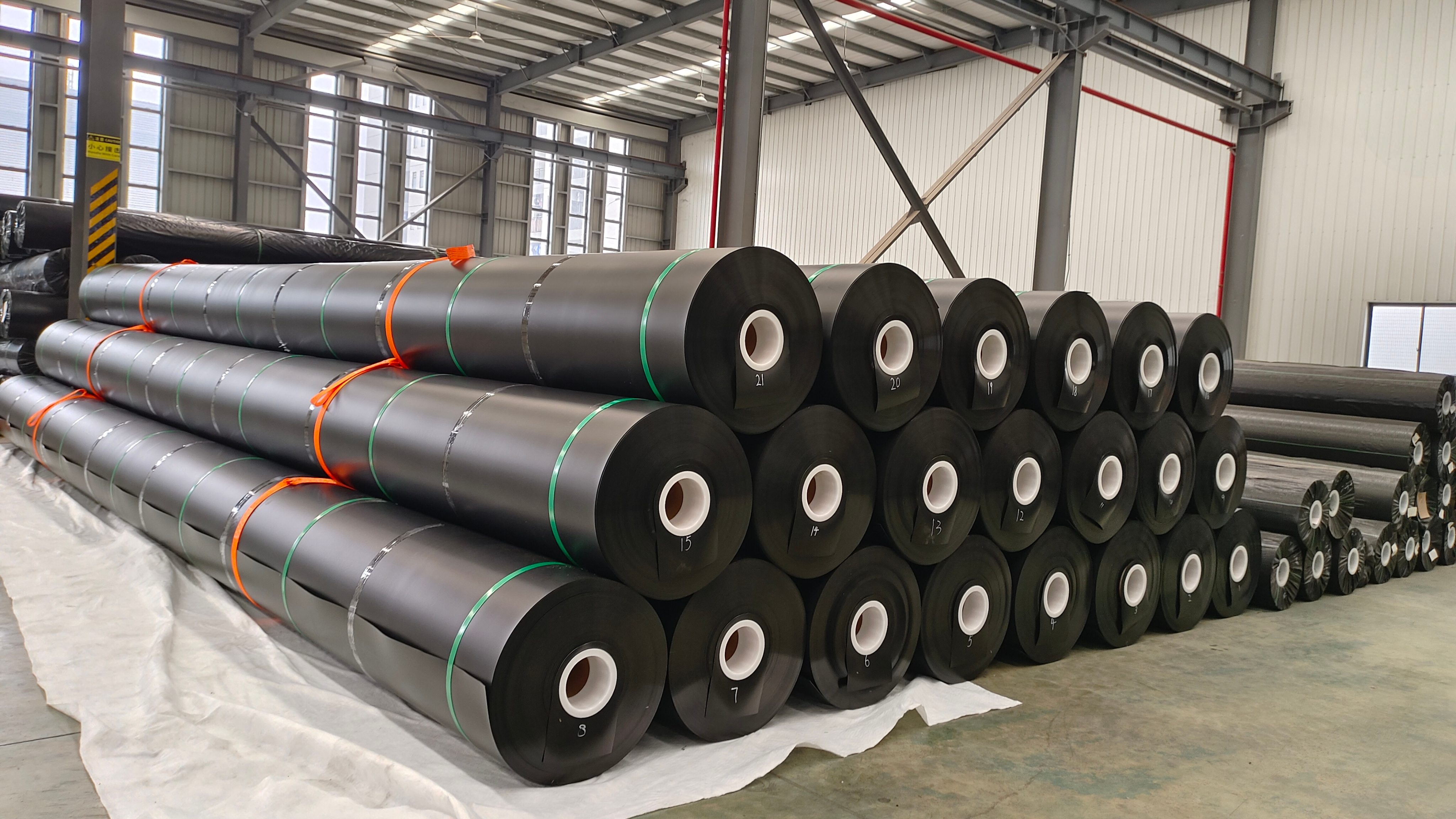
The journey begins with carefully selected polymer resins, fed into extruders where heat and pressure transform them into a molten state. This malleable material is then forced through precision dies, forming continuous sheets that emerge with a uniform consistency. It’s a delicate balance of temperature control and speed adjustments—too fast and the sheet weakens, too slow and production efficiency drops. Operators rely on real-time feedback to fine-tune the process, ensuring each millimeter meets the required tolerances before the sheet ever cools.
Once extruded, the still-warm sheet passes through a series of texturing rollers that imprint patterns ranging from subtle grain to aggressive anti-slip profiles. This isn’t just about aesthetics: the texture disrupts the material’s surface tension, distributing stress more evenly when the sheet is later subjected to bending or impact. The cooling rate is then carefully managed—often via calibrated water baths—to lock in the crystalline structure that gives the polymer its high strength without sacrificing the flexibility that many applications demand.
The final stage involves in-line testing where samples are pulled, stretched, and bent to verify tensile strength and elongation at break. Rejected sections are ground back into pellets and reintroduced upstream, creating a closed-loop system that minimizes waste. What emerges is a sheet product that feels substantial to the touch, with a textured surface that resists scuffs and hides minor scratches, ready to be cut, thermoformed, or bonded into everything from vehicle interiors to heavy-duty packaging.
Installation Know-How That Extends System Life
Proper mounting orientation is often overlooked but can dramatically affect a system's longevity. For components that generate heat, like power supplies or inverters, installing them with adequate ventilation space above and around prevents thermal buildup. Even a few extra inches can lower operating temperatures by 10°C or more, slowing the degradation of capacitors and solder joints. Sometimes the factory default orientation isn't optimal for your specific enclosure—rotating a fan-cooled unit 90 degrees might align its airflow with natural convection paths, reducing fan cycling and dust ingress.
Cable management is another unsung hero of durable installations. Bundling wires too tightly or routing them past sharp edges invites chafing and short circuits months or years later. Use spiral wrap or braided sleeving in areas where vibration is present, and always leave a service loop to prevent tension on connectors. When penetrating enclosures, select grommets rated for the environment—silicone holds up better than cheap rubber in UV-exposed or cold settings, maintaining the seal and keeping moisture out.
Don't underestimate the value of precise torque on fasteners. Over-tightening terminal screws can crack circuit boards or strip threads, leading to intermittent failures that are hard to diagnose. Under-tightening invites oxidation and arcing. A calibrated torque screwdriver set to the manufacturer's spec might cost more upfront, but it pays for itself by preventing field failures. Similarly, apply thread-locking compound sparingly and only where specified—excess can migrate into contacts and create insulation problems. These small disciplines during installation add years to a system's operational life.
How These Liners Handle Freeze-Thaw and UV Exposure
These liners are built from a tightly cross-linked polymer matrix that simply doesn’t let moisture in, so the freeze-thaw cycle never gets a foothold. Unlike porous materials that soak up water, expand when frozen, and crack over time, ours stay dimensionally stable through brutal temperature swings. We’ve watched them shrug off hundreds of lab-simulated freeze-thaw cycles without a single micro-fracture, which in the field means years of reliable containment without the sudden leaks that plague cheaper alternatives.
On the UV front, a high-load carbon black and stabilizer package is compounded directly into the resin—not just painted on the surface. This gives the liners a deep, all-the-way-through defense against harsh sunlight that holds up even if the surface gets abraded. Think of it like sunblock infused into the skin rather than a thin layer that washes off. After accelerated weathering tests equivalent to three decades of desert exposure, they keep their flexibility and show no chalking or brittleness.
What really sets these apart is how the two protections work together. Many products pit UV resistance against cold-weather flexibility by adding hard stabilizers that turn brittle in frost. Our formulation avoids that trade-off with an elastomeric backbone that stays pliable when the mercury drops, while a synergistic antioxidant system keeps ozone and UV attack in check. Installers appreciate that the material lays flat and doesn’t fight them even on a chilly morning, and engineers sleep better knowing the long-term integrity isn’t going to be kissed away by the sun.
Sealing In Hazardous Materials for Decades Without Fail
When you’re dealing with substances that can’t ever be allowed to escape, the reliability of the seal isn’t just a feature—it’s the whole point. Every joint, gasket, and weld has to perform year after year without the slightest hint of degradation. That means choosing materials that don’t creep under constant pressure, don’t crack with thermal swings, and resist chemical attack even when it’s slow and subtle. The best designs think ahead decades, not just the next inspection cycle, because a seal failure here isn’t an inconvenience; it’s the start of a long, invisible problem.
This isn’t achieved by one clever trick but by sweating the small details that accumulate into certainty. Surface finishes on flanges are held to roughness standards most shops never bother with. Bolts are torqued in sequences and stages that account for thermal expansion, relaxation, and the tiny settlements that happen over the first thousand hours. Sometimes the seal itself is a metal composite that digs into the mating surfaces, creating a barrier so intimate it becomes impermeable under the right load. And after installation, it’s not guesswork—helium leak testing or pressure decay methods confirm that what’s built matches the promise.
What often gets overlooked is the role of the environment around the seal. Outdoor installations face rain, ice, and UV radiation that can harden elastomers. Buried containment deals with soil movement and groundwater that shifts pH over time. In these cases, secondary containment and protective coatings become part of the sealing system, not afterthoughts. The goal is to make the primary seal’s job as stable as possible so that it remains the single point of focus—decade after decade, without needing to cross fingers before every inspection report.
Why Engineers Are Moving Away From Traditional Smooth Liners
The shift from traditional smooth liners isn't just a trend—it's a response to persistent field failures that smooth surfaces can't fix. Over time, perfectly honed bores tend to trap combustion byproducts and unburned fuel in microscopic valleys, leading to bore glazing and a loss of oil retention exactly where it counts. This glaze acts like a seal against the very lubrication it's supposed to promote, so rings start to skate over the surface instead of riding a proper oil film. For operators chasing longer service intervals, that's a recipe for costly downtime.
Engineers have also realized that a completely smooth surface leaves no room for error during break-in. Without controlled roughness, rings and liners can't form that ideal mating layer, so you're left relying on additives or extended low-load run-ins that many end-users skip anyway. Plateau honing and textured finishes address this by creating a network of oil-retaining pockets while shaving off the highest peaks, giving a second-stage surface that beds in quickly and holds up under high compression. It's a simple mechanical tweak that bridges the gap between factory tolerances and real-world abuse.
Corrosion resistance is another driving factor, especially in engines that see stop-start cycles or alternative fuels. Smooth liners tend to wear uniformly until a pitting chain reaction starts, at which point the damage spirals. Modern engineered surfaces—whether laser-textured or chemically etched—disrupt that pattern by allowing corrosion inhibitors to anchor in place. The result is a liner that wears gradually and predictably, rather than failing without warning. It's not about adding complexity; it's about solving the problems that eat away at reliability over the long haul.
FAQ
An ODM textured geomembrane is a specialized synthetic liner produced by an original design manufacturer, featuring a rough, uneven surface. This surface texture is intentionally created during manufacturing to improve the liner's interaction with adjacent materials, such as soil or geotextiles, making it a critical component in modern containment engineering.
Partnering with an ODM supplier means you're working directly with the source that designs and engineers the product. This allows for deeper customization—material formulation, asperity height, sheet width—and tighter quality control than buying off-the-shelf from a distributor. It’s especially valuable for non-standard landfill lining, mining heap leach pads, or any project where generic solutions fall short.
Texturing creates a high-friction interface that resists sliding, even on steep slopes. The asperities interlock with geotextiles or compacted clay, increasing interfacial shear strength and reducing the risk of liner slippage. This directly translates to safer, more stable containment structures without relying solely on heavy anchorage trenches.
They are indispensable in applications that demand slope stability and long-term containment integrity: municipal solid waste landfills, hazardous waste cells, mining tailings ponds, agricultural lagoons, and water reservoirs. Essentially, anywhere gravity and hydraulic pressure could challenge a smooth liner, a textured version becomes a better choice.
The key isn't just the texture—it’s the combination of high-quality resin blends, UV/thermal stabilizers, and the stress-crack-resistant formulation often used in premium ODM offerings. The textured surface can also help distribute mechanical loads more evenly, reducing point stresses that cause localized failure. When properly installed, these liners resist chemical attack, weathering, and puncture for decades.
Absolutely. ODMs work closely with design engineers to adjust parameters like asperity density, thickness (from 1.0 mm to 3.0 mm or more), carbon black content, and even color for UV exposure. Custom edge finishing and pre-fabrication of large panels in the factory are also common, minimizing on-site welding and fitting challenges.
The texture creates a mechanical interlock with the subgrade or overlying drainage layer, significantly raising the interface friction angle—often into the 30–35° range or higher, compared to just 10–20° for a smooth geomembrane. This is critical for veneer stability on slopes, preventing liner system failure during construction filling or long-term operation.
Yes. The texture can slow down wedge welders slightly due to increased drag, but modern dual-track fusion welding equipment adapts well. Contractors must handle panels more carefully to avoid damaging the surface profile, and detailing around penetrations often requires pre-fabricated boots. That said, the improved safety margins on slopes usually outweigh these minor complexities.
Conclusion
ODM textured geomembranes are redefining containment durability through an engineered surface that dramatically boosts slope stability. By creating high-friction interfaces, these liners prevent slippage of cover soils and waste materials, even on steep inclines where smooth geomembranes would fail. The texturing process—which transforms polymer resin into robust sheets with a controlled asperity pattern—not only enhances mechanical interlock but also preserves long-term tensile strength and puncture resistance. This durability extends through extreme environmental cycles; freeze-thaw conditions and intense UV exposure cause minimal degradation thanks to advanced stabilizer packages baked into the resin. The result is a liner system that maintains its integrity for decades, confidently sealing in hazardous substances without the hidden risks of stress cracking or interface failure that plague traditional materials.
Installation practices play an equally vital role in system longevity, and ODM textured geomembranes excel because their surface texture facilitates secure seaming and reduces installation damage compared to smooth alternatives. Proper deployment techniques—including wrinkle management and subgrade preparation—ensure that the liner’s performance is not compromised before it even begins its service life. Engineers are increasingly moving away from conventional smooth liners because they recognize that the lifetime cost of a containment system hinges on avoided failures, not just initial material expense. The textured surface eliminates the need for costly secondary texturing or geotextile layers, streamlining construction while delivering a monolithic barrier that stands up to demanding chemical and physical stresses. In essence, choosing a high-quality textured geomembrane means investing in a containment solution that performs reliably from the first weld inspection through decades of environmental assault, all while maintaining the low permeability essential for protecting our ecosystems.
Contact Us
Contact Person: Jerry Qiu
Email: [email protected]
Tel/WhatsApp: +65 84265294
Website: https://www.jinseed-geo.com