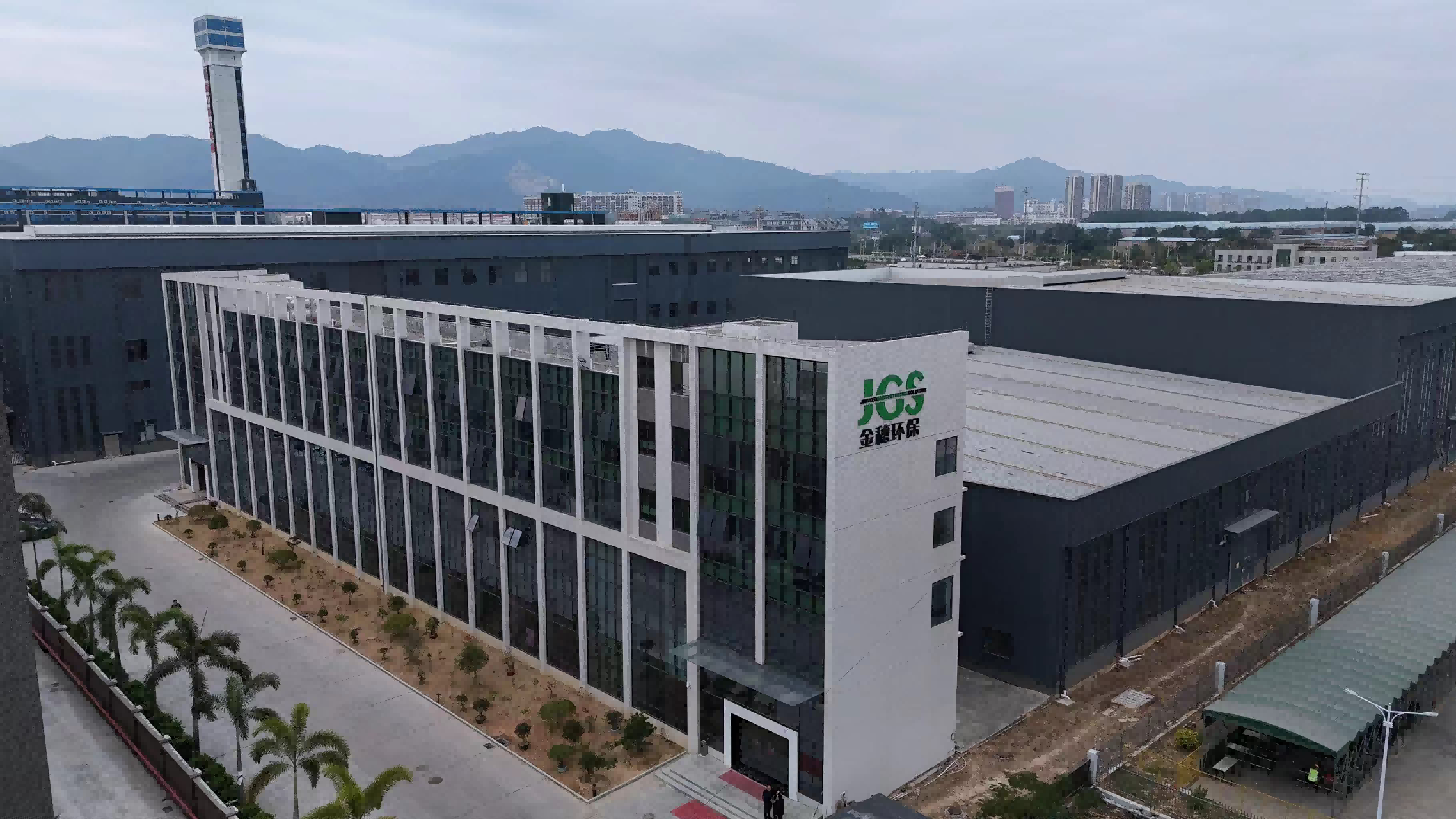

LLDPE Geomembrane Supplier Guide for Durable Containment Systems
2026-08-24
Every containment system—whether a landfill liner, mining leach pad, or water reservoir—lives or dies by the quality of its geomembrane. Yet too many projects overlook a harder truth: the supplier behind the liner matters just as much as the resin itself. In this guide, we cut through the spec sheets and sales pitches to show what durable containment really demands. From resin selection to welding support, JInseed Geosynthetics Solution has spent years turning these requirements into field-proven reality. Here is what to look for before you sign your next purchase order.
Why LLDPE Flexes Where HDPE Cracks Under Stress
The difference starts at the molecular level. LLDPE is built with frequent short-chain branches that interrupt the polymer backbone just enough to prevent tight crystal packing. These branches force the chains to remain slightly separated, creating a material with lower crystallinity and plenty of amorphous regions that can absorb energy by sliding and stretching. HDPE, by contrast, has almost no side branches. Its chains pack closely into large, ordered crystals, which makes the polymer stiff and strong but also more brittle when a crack begins to propagate through those rigid crystalline zones.
Under stress, this molecular architecture translates into very different failure modes. LLDPE yields gradually—when you bend or stretch it, the polymer chains uncoil and the material deforms in a ductile way, often whitening at the stress point before any break occurs. That visible deformation buys time and warns of overload. HDPE can fail more suddenly, especially if a small notch or scratch is present. Because its crystalline structure resists chain movement, the stress concentrates at the tip of a flaw, and the crack can travel through the material with minimal plastic deformation. In cold temperatures or under repeated flexing, this tendency becomes even more pronounced.
This is why engineers choose LLDPE for applications that demand repeated bending, stretching, or impact resistance—think heavy-duty liners, flexible tubing, or geomembranes that must conform to uneven ground. HDPE still excels in rigid containers, pipes, and structural components where high stiffness and chemical resistance matter more than flexibility. But when the failure mode matters, the short-chain branches in LLDPE are a quiet advantage: they trade a little stiffness for a lot of toughness.
Reading a Supplier’s Quality Paper Trail Before You Sign
When evaluating a supplier, most teams glance at the certificate on the wall and call it done. But the real story sits in the paper trail—batch records, deviation logs, and corrective action reports that show how a facility behaves when no one is watching. Ask for a recent internal audit summary and the last three customer complaint investigations, not just the polished quality manual. If a supplier hesitates to share those documents, treat that silence as a red flag before you ever uncap a pen.
Look at how the documents connect to each other. A good paper trail isn't a pile of PDFs; it's a chain of evidence linking raw material lot numbers to finished product release, with inspection data and out-of-spec results clearly annotated. Check whether nonconformances were closed within a defined timeline and whether the root cause analysis actually digs past “operator error.” Suppliers that hide behind vague language or missing dates often have systemic issues that a certificate alone won't reveal.
Finally, compare the paperwork against what you see on a visit or during a call. If a supplier claims ISO 13485 compliance but can't produce a current internal audit schedule, that's a mismatch worth probing. The documents you review before signing are not just formalities—they're your practical tripwire for quality failures that could land on your production line months later.
Field Repairs That Outlast the Original Liner
Most field repairs fail early because someone rushed the surface prep. Wire brushing until the metal shines isn't enough—you need an angular profile around 75 to 100 microns. Wipe the area with a fast-evaporating solvent, then warm the substrate slightly above ambient before mixing your repair compound. A two-part epoxy paste with ceramic fillers will bond better than a standard trowel-grade material, especially if the liner sees wet-dry cycling.
Don't ignore the feathered edge. Cut the damaged liner back to a sharp shoulder instead of a thin taper, and key the perimeter with a small grinder so the patch locks in mechanically. For deeper gouges, build the repair in two lifts rather than one thick fill—this lets trapped air escape and prevents shrinkage cracks. If you can, post-cure the patch with a heat gun or IR lamp for a couple of hours; the extra crosslinking is what makes a field fix outlast the surrounding original liner.
Finally, test the repair under service conditions before you walk away. A low-voltage holiday detector at the same setting used for the original liner will catch pinholes that look fine to the eye. Mark any suspect spots and touch them up immediately. Log the ambient temperature, humidity, and product batch in your maintenance record—next time a liner fails in the same area, that data will tell you whether the problem is the repair method or the operating environment.
Hidden Costs of Cheap Resin in Containment Projects
Cheap resin often looks like a budget win until the first thermal cycle or chemical spill. The lower-grade polymers shrink more during cure, leaving hairline gaps around seams and anchors that go unnoticed until a containment breach occurs. By then, the cost of stopping operations, draining the area, and re-sealing with a proper system far exceeds any upfront savings.
There's also the labor side nobody quotes in the purchase order. Bargain resins tend to have inconsistent viscosity and unpredictable gel times, so crews waste hours adjusting mixes or cleaning up failed pours. A project that should take two days stretches into four, and every extra hour on site is another hidden line item.
Then comes the replacement cycle. Cheap resin degrades under UV exposure and repeated temperature swings, turning brittle within a few years. When the lining cracks again, you're not just paying for new resin—you're paying for surface prep, disposal of the old material, and another round of downtime. Quality resin would have lasted decades, making the initial price difference irrelevant.
Matching Geomembrane Texture to Slope and Cover Soil
The surface texture of a geomembrane plays a bigger role in slope stability than many engineers first assume. On steeper slopes, a smooth or lightly textured surface can dangerously reduce interface friction with the cover soil, especially after heavy rain when the soil becomes saturated and heavy. Choosing a heavily textured surface increases mechanical interlock and shear resistance, which helps keep the cover layer from creeping downhill over time.
Cover soil characteristics should guide the texture selection as well. For coarse, angular materials like crushed rock or gravel, a single-sided textured geomembrane may be enough, because the aggregate itself digs into the membrane and creates strong frictional contact. For finer soils such as silts and clays, double-sided texturing is often necessary to compensate for their lower internal friction and greater tendency to slide when wet.
Field experience shows that mixing slope angle with soil type is not a place for guesswork. A moderately steep slope with a smooth liner might pass a laboratory test but fail after a few seasons of freeze-thaw or wet-dry cycling. By matching the texture pattern—whether spikes, studs, or a rough fabric-like finish—to both the slope gradient and the cover soil, designers can avoid expensive repairs and extend the functional life of the lining system.
Long-Term Performance Data: Questions Suppliers Hate
Many procurement teams ask for long-term reliability metrics only after a contract is signed. Suppliers deflect because real-world failure rates often arrive years later, and warranty claims rarely map to the conditions where equipment actually runs. A better approach is to request field service logs, parts replacement histories, and dated teardown photos from installations older than five years. Those records expose patterns that spec sheets don't.
When a vendor says "that data is proprietary" or "each application is different," it usually means the numbers exist internally but won't survive a side-by-side comparison. Ask for the same failure categories across at least three reference sites with similar duty cycles. If no one can produce time-stamped maintenance records, treat that silence as a durability risk.
The most uncomfortable question is not about MTBF. It's "What breaks first, and what did you change to stop it?" Suppliers hate that because it forces them to admit design revisions, silent material swaps, or cost-down decisions that hurt longevity. Chasing those answers before purchase saves more than any warranty negotiation later.
FAQ
LLDPE resin has a higher elongation and stress crack resistance than many rigid plastics, so liners can stretch slightly with ground movement or settling without tearing. That flexibility helps maintain a continuous barrier in ponds, landfills, and secondary containment where subgrade shifts are common.
Look at resin sourcing, extrusion consistency, and whether the supplier provides documented thickness and density readings across the full roll. A dependable supplier will also share weldability data or offer field support, because installation defects cause more failures than raw material faults.
LLDPE works well in water retention ponds, stormwater basins, canal liners, and heap leach pads where the liner may need to conform to uneven terrain. It is also common for temporary covers and floating baffles because it handles UV exposure and thermal movement better than very stiff sheet materials.
Not necessarily. Thickness adds puncture resistance, but durability also depends on resin quality, additive package, and installation care. A well-installed 40 mil LLDPE liner with proper subgrade preparation can outperform a poorly welded 60 mil liner, so the whole system matters more than any single number.
Hot wedge welding and extrusion welding are both used. Hot wedge is often preferred for long straight runs because it creates consistent dual-track seams, while extrusion welding works better for patches, repairs, and tight corners. In all cases, the seam area must be clean and dry, and trial welds should be done on site before production welding.
Keep rolls on a flat, dry surface and protect them from prolonged direct sunlight when they are still wrapped. Use lifting bars or slings to move rolls, avoid dragging, and inspect each roll for creases or scratches after unloading. Minor surface marks are usually acceptable, but deep gouges should be documented and repaired.
Request certified test results for density, tensile strength, elongation, and tear resistance from the supplier's batch records. Independent third-party testing of a sample roll is even better. The key is to match the actual roll numbers on site to the documentation, not just accept a generic data sheet.
Exposed liners should be inspected periodically for punctures, seam peels, or UV degradation, especially around pipe penetrations and anchor trenches. Small damages can be patched with the same resin and welding method, and keeping the surface free of sharp debris extends service life more than most people expect.
Conclusion
A liner that cracks under stress is a liability you don't need. LLDPE earns its place in containment systems because it stretches and flexes where HDPE turns brittle, especially on uneven subgrades or in cold climates. But that advantage only holds if the supplier can back it up. Ask for full resin certifications, batch-level test results, and traceability to the manufacturing line before you commit. Cheap resin might look like a bargain until you factor in premature stress cracking, lower oxidation resistance, and a liner that fails years ahead of schedule. The real cost shows up in downtime, excavation, and reinstallation—expenses that never make it onto the initial quote.
A good supplier won't dodge questions about long-term performance data. Press them for aged tensile strength, retained elongation, and results from oxidative induction time tests, not just a glossy data sheet. If they hesitate, that's your signal to walk. Field repairs deserve the same scrutiny as the original liner. Extrusion welds done with matching LLDPE rod and proper surface preparation can outlast the sheet itself, but rushed patches trap moisture and fail within seasons. Also match the surface texture to the site: a textured side improves slope stability and cover soil interaction, while smooth surfaces reduce friction in flat applications. Get these details right and the liner becomes a system, not just a material.
Contact Us
Contact Person: Jerry Qiu
Email: [email protected]
Tel/WhatsApp: +65 84265294
Website: https://www.jinseed-geo.com