
China FRP Grating: The Ultimate Guide to High‑Performance Fiberglass Flooring Solutions
2026-06-21
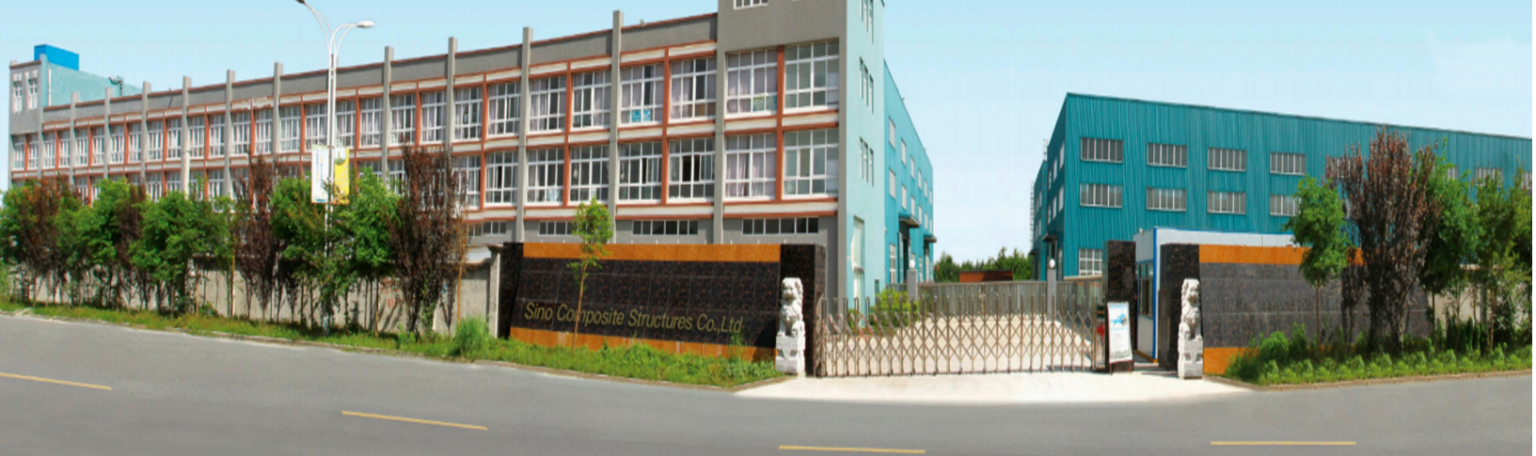
Fiberglass reinforced plastic (FRP) grating is transforming industrial flooring across the globe, and China has emerged as a powerhouse in manufacturing these high-performance solutions. If you're seeking corrosion‑resistant, lightweight, and durable grating, you're in the right place. In this guide, we explore why leading companies trust Sino Grating for their toughest projects — and how their expertise delivers unmatched value in safety and longevity.
Skip the Chemicals: Why FRP Laughs at Corrosion
Traditional materials like steel and concrete often rely on protective coatings, sealants, or chemical treatments to fend off rust and decay. FRP takes a different path entirely. Its polymer matrix is inherently resistant to a wide range of acids, alkalis, salts, and solvents, meaning it doesn't just survive corrosive environments—it thrives in them without any extra chemical assistance. This built-in resilience eliminates the ongoing cost and labor of reapplying protective layers, making it a low-maintenance dream for chemical plants, wastewater facilities, and coastal structures.
The secret lies in the molecular structure. Unlike metals that oxidize or concrete that spalls when moisture and chemicals seep in, FRP's composite makeup is non-reactive and impermeable. The glass or carbon fibers provide strength, while the surrounding resin acts as a permanent shield. Even if the surface gets scratched, the material doesn't start a chain reaction of degradation. There's nothing to rust, no reaction waiting to happen—just a quietly defiant resistance that keeps the structure sound decade after decade.
What sets FRP apart isn't just its chemical inertia, but how it sidesteps the entire corrosion management cycle. Forget about cathodic protection, pH monitoring, or scheduled chemical washes. By choosing a material that inherently shrugs off corrosive attack, engineers can design with confidence, knowing that the structure won't secretly weaken from within. It's not just about durability; it's about reclaiming time and resources that would otherwise be spent fighting a losing battle against nature's relentless chemistry.
Lightweight but Heavy‑Duty: The Engineering Paradox
It sounds almost contradictory: how can something be featherlight yet strong enough to bear immense loads? Walk through any modern factory or pick up a high-end carbon fiber bicycle, and you’ll feel the answer in your hands. Engineers have spent decades turning this paradox into reality, weaving together material science and clever geometry to do more with less. The secret often lies in structures that mimic nature—honeycomb cores, hollow tubular frames, and trusses that distribute stress so efficiently that a gram saved here can carry a kilogram there. It’s not magic; it’s the relentless pursuit of efficiency where every ounce of material is made to earn its place.
The real breakthrough came when designers stopped thinking in terms of brute mass and started treating force as a fluid that needs guiding. Instead of simply thickening a beam, they hollow it out and add internal ribs, redirecting loads the way an arch channels weight to the ground. Advanced alloys and composites, like titanium aluminides or reinforced polymers, have radically changed the game—offering strength-to-weight ratios that would have seemed fanciful a generation ago. Yet even with these materials, the cleverness is in the arrangement: a lattice block can outperform a solid slab because it exploits the geometry of triangles to turn bending into compression and tension, where materials are happiest.
The result is everywhere, hidden in plain sight. Aircraft wings flex under turbulence but shrug off years of cyclic stress; bridges span wider with less steel; prosthetics now mirror the lightness and resilience of real limbs. This engineering paradox isn’t about cheating physics—it’s about understanding it so deeply that limitations become opportunities. What once seemed like a compromise between heft and durability has become a showcase for human ingenuity, proving that the strongest structures don’t have to be the heaviest, just the smartest.
From Petrochemical Plants to Pedestrian Bridges: FRP’s Playground
FRP has quietly woven itself into the fabric of modern infrastructure, thriving in environments that would chew up traditional materials. Inside petrochemical plants, where corrosive fumes and chemical baths are the norm, steel rusts and concrete crumbles—but FRP stands its ground. Walkways, handrails, and storage tanks made from fiber-reinforced polymer shrug off acids and alkalis that make short work of metal. It’s not just about survival; these structures stay light enough to install without heavy machinery, and they don’t demand the constant repainting or replacement cycles that maintenance crews dread.
Shift the scene from industrial sprawl to a quiet urban river crossing, and FRP is just as much at home. Pedestrian bridges crafted from the composite spring up with a fraction of the weight of conventional steel or concrete spans—yet they carry the same loads. This lightness means foundations can be simpler, and assembly often feels more like slotting pieces into place than sweating through months of construction. Architects appreciate the design freedom too: curved profiles, translucent deck panels, and custom colors emerge from molds rather than being laboriously tacked on. The result is a bridge that looks organic, almost sculptural, while holding up to decades of foot traffic, UV exposure, and freeze-thaw cycles without blinking.
What makes all this possible is the chameleon-like nature of FRP itself. By tweaking the resin mix and fiber orientation, engineers can dial in the exact balance of strength, flexibility, and chemical resistance needed for a given task. A pipe in a chlorine plant demands different properties than a bridge girder in a coastal park, yet both emerge from the same basic toolkit. This adaptability also extends to on-site repairs: a quick lay-up patch can restore a damaged section without hot work permits or extended downtime. From the harshest industrial underbellies to the most photographed footbridges, FRP’s playground really has no boundaries.
Behind the Mesh: What Goes into a Top‑Tier FRP Panel
The reinforcement mesh at the core of a high-quality FRP panel isn’t an afterthought—it’s engineered to handle real stress. We weave fiberglass strands in a balanced, multi-axial layout that distributes load evenly, preventing weak spots that lead to premature cracking. The yarns are coated with a specialized sizing that bonds aggressively to the resin matrix, ensuring the final composite stays rigid under thermal cycling and impact. This isn’t just about strength; it’s about how the panel behaves over decades, resisting fatigue where lesser materials would delaminate or warp.
Resin choice separates a top-tier panel from something merely functional. We use a high-solids, UV-stabilized polyester formulation that cures to a smooth, hard finish without becoming brittle. It penetrates the mesh completely during vacuum infusion, leaving no dry spots and locking out moisture that would otherwise cause blistering. Additives are blended in for long-term color retention and fire resistance—not the kind of coating that washes off, but chemistry that’s part of the panel’s DNA. The result is a surface that doesn’t chalk or fade even when facing constant sun and rain, while still taking fasteners without mushrooming.
Manufacturing tolerance is where many FRP panels fall apart. We run continuous pultrusion lines with real-time monitoring of gel time and draw speed, catching shifts in viscosity before they become defects. Each panel is gauged for thickness uniformity across its width, and the edge is trimmed precisely—no wavy cuts that betray rushed production. A final heat-cure step locks in the crosslink density, eliminating post-cure shrinkage that would telegraph fiber print-through. It’s the difference between a panel that looks okay on day one and one that still looks sharp after a decade of service.
Picking the Perfect Grating: No Guesswork Required
A grating that works wonders in one setup might fail completely in another, so matching the specs to your actual operating conditions is the only real shortcut. Start by nailing down the load requirements, the span, and the type of traffic it will face—foot traffic, light carts, or heavy forklifts. Then factor in the environment: wet, corrosive, or high-heat settings quickly rule out entire material categories. Bar thickness, spacing, and bearing bar depth aren’t just numbers on a sheet; they directly control strength, slip resistance, and how fast debris falls through.
Instead of sifting through endless charts, focus on a handful of proven combinations that match your dominant need. For outdoor walkways, a serrated surface paired with a wider pitch can drastically reduce slips without constant cleaning. In a chemical plant, resin-bound fiberglass outperforms steel by a wide margin once you look past the initial cost. And if you’re trying to balance budget and durability, asking for mill finish aluminum with a slightly thicker bearing bar often beats the quoted “premium” option. The difference between a grating that lasts a decade and one that needs replacement in two years usually comes down to asking about real-world examples from the supplier, not just the catalog numbers.
Why China’s FRP Industry Keeps Surprising the World
A decade ago, few outside the composites sector would have predicted China's fiber-reinforced polymer industry would leap from a niche supplier to a global force reshaping material supply chains. The numbers alone hint at the transformation: production capacities have multiplied in ways that consistently outpace international forecasts, leaving analysts scrambling to adjust their models. But it's not just about volume—it's the sheer pace at which new plants come online, often in regions previously blank spots on the industrial map.
What really catches engineers off guard is how quickly Chinese manufacturers have moved beyond standard glass-fiber products into high-performance territory. Carbon fiber, basalt fiber, and hybrid composites once dominated by Western labs are now rolling off lines in Zhejiang and Shandong with quality that rivals established brands. This wasn't meant to happen this fast—conventional wisdom said the technical hurdles would act as a bottleneck for years, but iterative problem-solving on factory floors has proven more agile than textbook theories suggested.
Perhaps the most underdiscussed twist is the way FRP applications in China keep branching into unexpected sectors. While aerospace and wind energy are obvious arenas, the country's infrastructure projects are silently embedding composites into bridges, sewage networks, and even modular housing in ways that make traditional materials look outdated. These aren't pilot projects; they're becoming standard practice, and that quiet normalization might be the biggest surprise of all.
FAQ
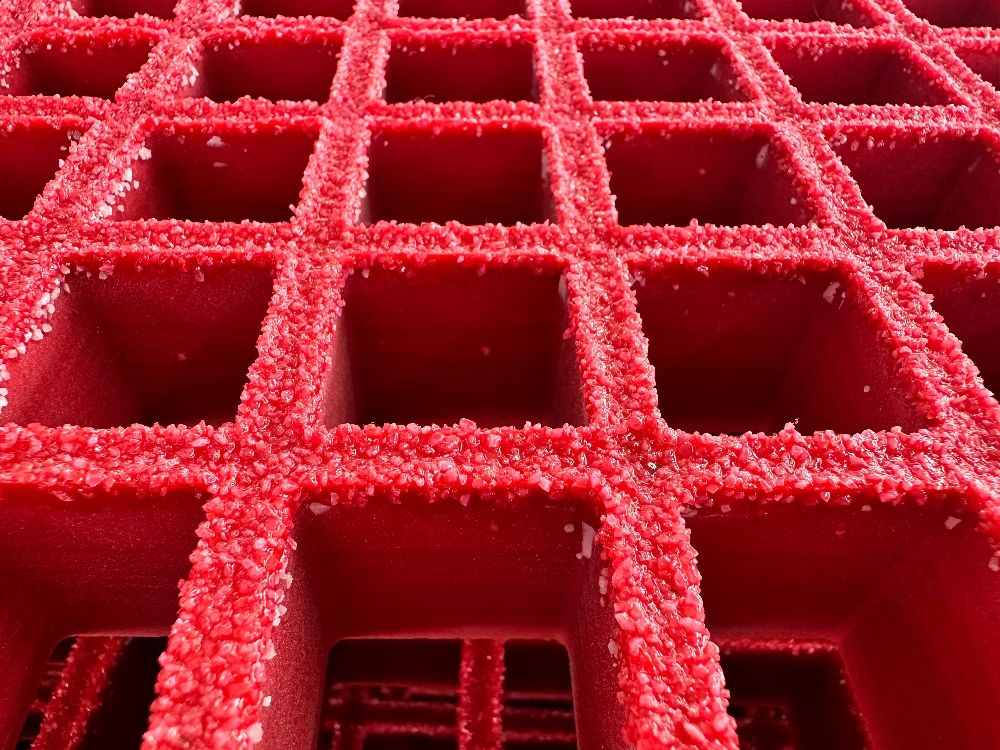
FRP grating is a structural platform made from fiberglass reinforced plastic, combining continuous glass fibers with a thermosetting resin matrix. Unlike metal grating, it won't corrode, rust, or conduct electricity, and it weighs roughly two-thirds less than steel while offering comparable strength. The open-mesh design allows light, air, and liquids to pass through, making it a safer alternative in slippery or chemically aggressive workspaces.
High-performance fiberglass flooring brings exceptional corrosion resistance, a high strength-to-weight ratio, and fire-retardant properties when formulated with the right resins. It's non-magnetic, non-sparking, and requires minimal maintenance compared to steel or aluminum. The built-in slip resistance and impact resilience reduce workplace accidents, while its long service life in harsh chemical or marine settings lowers replacement costs dramatically.
You'll find FRP gratings in chemical plants, offshore platforms, wastewater treatment facilities, food processing plants, and power generation stations. They're also popular in pedestrian walkways, trench covers, and ramps where saltwater or chemical exposure rules out metal. Public infrastructure like bridges and marinas often use them for safe, slip-resistant decking that won't deteriorate from constant moisture.
China has built an integrated supply chain for fiberglass raw materials, advanced pultrusion machinery, and skilled labor, which translates to competitive pricing without sacrificing quality. Many Chinese manufacturers hold international certifications like ISO and ASTM, and they routinely customize grating panels to meet overseas project specifications. The scale of production allows shorter lead times, and direct factory relationships eliminate middlemen, making high-performance grating more accessible globally.
FRP grating is inherently inert to a vast range of acids, alkalis, salts, and solvents that would rapidly degrade galvanized or stainless steel. While steel eventually succumbs to pitting or rust once its protective layer is breached, FRP's resin matrix—especially when formulated with vinyl ester or phenolic resins—provides through-and-through protection even if the surface is scratched. This makes it a go-to choice for chemical storage areas and coastal installations.
Load capacity is critical—check the unsupported span and expected foot or vehicle traffic. Resin type determines chemical compatibility: polyester suits general use, vinyl ester handles aggressive chemicals, and phenolic excels in fire-prone zones. You'll also want to specify mesh size for drainage and debris, surface grit level for slip resistance, and color for safety coding or aesthetics. Panels can be molded for multidirectional strength or pultruded for maximum stiffness in one direction.
Installation is straightforward because the material can be cut and drilled with standard carbide tools, and it requires no welding or heavy lifting equipment. Pre-engineered panels and clip systems speed up assembly. Maintenance is minimal—you just need occasional washing to remove surface grime, and there is no need for repainting or rust treatment. The color is typically integral to the resin, so it won't fade unevenly or require touch-ups.
Absolutely. Manufacturers can adjust the thickness, rib spacing, and resin-to-glass ratio to meet precise deflection and load-bearing targets. Custom panel sizes, cutouts for pipes, and even integrated handrail supports are commonplace. If standard grids don't fit a space, molded grating can be produced in curved or tapered shapes. This flexibility makes it a seamless fit for complex retrofits where off-the-shelf metal solutions simply don't work.
Conclusion
Fiberglass reinforced plastic grating has reshaped how industries approach flooring in aggressive environments. Unlike steel, which succumbs to rust, or wood that rots, FRP panels shrug off acids, alkalis, and salts without a second thought. That’s why you’ll find them thriving in petrochemical plants, offshore platforms, and water treatment facilities—anywhere corrosion is a constant threat. Yet the material doesn’t just survive; it excels by offering a remarkable strength-to-weight ratio. Installation teams appreciate this paradox: panels light enough for a two-person lift yet capable of supporting heavy equipment and foot traffic year after year. Pedestrian bridges and marine docks also benefit from the same blend of durability and ease of handling, proving FRP’s adaptability far beyond industrial zones.
Behind every reliable panel is a meticulous manufacturing process. Top-tier FRP grating starts with high-quality resin and glass fiber, combined under controlled conditions to ensure consistent mesh patterns and load-bearing integrity. Choosing the right product isn’t a guessing game—factors like mesh size, thickness, and resin type must match the application. This is where Chinese manufacturers have sharpened their edge, blending advanced production lines with rigorous standards. The result is a global supply of cost-effective, durable grating that continues to surprise engineers and contractors worldwide, offering tailored solutions that seamlessly bridge performance demands and budget realities.
Contact Us
Contact Person: Nicholas Zhu
Email: [email protected]
Tel/WhatsApp: 18921275456
Website: https://www.sino-grate.com